



A Slow Weekend on the Pembrokeshire Coast Path
Coastal Walks | October 4, 2026
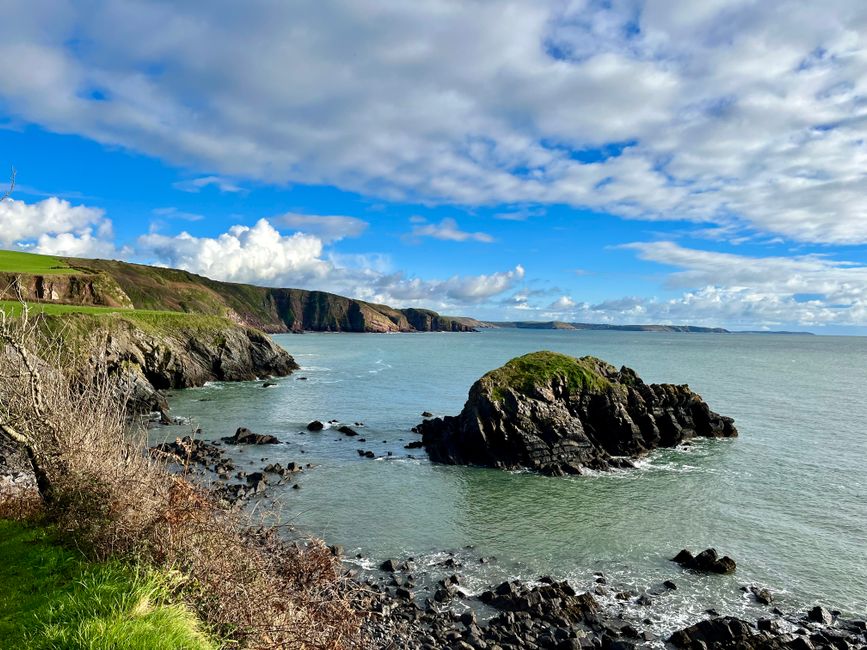
There is a particular kind of quiet that settles over the Pembrokeshire coast in the hour after sunrise, when the only sounds are gulls arguing over the tideline and your own boots on packed earth. This corner of southwest Wales has been a national park since 1952, and the coast path that threads along its edge is one of the finest long-distance walks in Britain. You do not need to tackle the whole thing. A weekend is enough to fall for it.
Start in the little cathedral city of St Davids, which is really a large village with a very grand church at its heart. The ruined bishop's palace next door is worth an hour of wandering, and the ice cream shops on the main street are worth another. From here, the path heads west toward St Non's Bay, where a spring and a crumbling chapel sit above a rocky shore. It is said to be the birthplace of the patron saint of Wales, though on a grey morning it simply feels like a good place to stand and watch the water.
Cliffs, coves and the odd seal
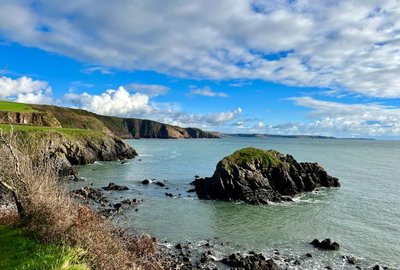
The stretch from Caerfai Bay to Solva is the sort of walking that ruins you for pavements. The path rises and falls along the cliff tops, past outcrops of purple and green rock, through patches of sea thrift and gorse that smell faintly of coconut in the sun. Below, the sea does its endless work on the shoreline, and if you pause at the right moment you will often spot a grey seal bobbing in the swell, watching you with what looks suspiciously like amusement.
Solva itself is a small harbour village tucked into a narrow inlet, where the tide drains out to leave boats leaning on their sides. There are a couple of pubs, a gallery or two, and a general sense that nothing here has ever been in a hurry. It makes a sensible place to stop for the night, either in the village or in one of the farm cottages scattered along the lanes behind it.
Making the most of the miles
Walkers who push on past Solva are rewarded with the approach to Newgale, a long sweep of pebble and sand backed by a shingle bank that takes the brunt of winter storms. The beach is popular with surfers when the swell is right, and with dogs and children when it is not. From the top of the bank, on a clear day, you can look back along the coast and see the whole shape of the walk you have just done.
A few practical notes. The path is well waymarked but the going can be muddy after rain, so boots beat trainers. Buses run along the coast road in summer and can save you a long trudge back to your starting point. Pack water, because the villages are further apart than they look on the map, and keep an eye on tide times if you plan to drop down to any of the beaches. Most of all, resist the urge to rush. This is a coast that rewards dawdling, and the best moments tend to arrive when you stop walking altogether and simply sit on a headland, listening to the sea do its thing.


Harbour And Hill

How to build a classic seaside day around a bucket, a line and a portion of chips eaten before they go cold.